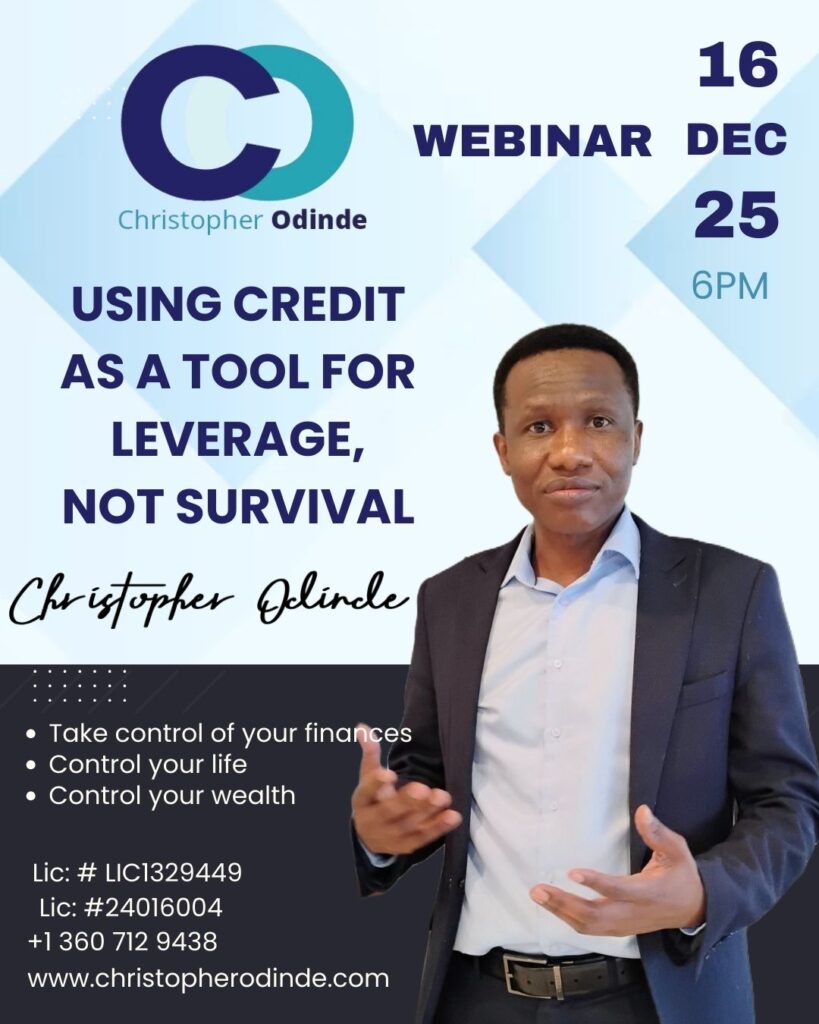
Webinar Dec 16, 2025 at 16:40 PST
Meeting records Recording
Summary
Christopher Odinde asserted that credit is the new currency and a double-edged sword in the American economy, which functions as a tool for empowerment but necessitates financial discipline to avoid the compounding interest strategies used by financial giants like JP Morgan, Wells Fargo, and Chase. Mr. Odinde outlined core strategies for taking control of personal finances, including saving and budgeting, differentiating between good and bad debt, strategically building credit by utilizing credit unions and minimizing credit card usage, and leveraging credit for asset acquisition such as home ownership. The discussion, in which Ken Gatimu and Elizabeth Kanee (Betty Hamisha) also participated, concluded with Christopher Odinde offering free consultation services for personal financial planning and sharing their contact information: 360-712-9438 and Christopherodimde.com, upon inquiry from Julius Nzima.
Details
Notes Length: Standard
- The Credit Economy and Wealth Creation Christopher Odinde asserted that credit is the new currency, and the American economy operates on it, which can be confusing for those not born in the US. They explained that credit enables the working and middle classes to acquire things they cannot immediately afford, thus compelling them to work and drive the economy. Mr. Odinde emphasized that although credit provides this capability, the principle that “the borrower is a servant to the lender” still applies, making financial discipline crucial.
- Money as a Tool for Empowerment Christopher Odinde defined money not as a gift, but as a tool for empowerment that influences one’s thinking, speech, and self-expression. They stressed that the only money that can truly save a person is the money they save, emphasizing the importance of savings. Mr. Odinde also noted that when someone spends money, they lose the coverage and empowerment that money offers.
- Strategies of Financial Giants and Compound Interest Christopher Odinde discussed the financial strategy employed by large institutions, stemming from John D. Rockefeller: “dominate, consolidate and control”. This strategy is visible in companies like Google, Amazon, and financial institutions such as JP Morgan, Wells Fargo, and Chase. Mr. Odinde highlighted that when credit is created, debt is born, leading to interest and compounding interest, which they called the “eighth wonder of the world”. This system can cause debt to grow quickly and out of control for borrowers, while being used by banks and the wealthy to make substantial money.
- Taking Control of Personal Finances Christopher Odinde clarified that the purpose of the discussion is for individuals to take back control of their finances and resources. They outlined three essential steps: identifying the problem with cash flow, reviewing the situation to understand how they reached their current financial state, and creating a plan. Mr. Odinde, a certified financial advisor, noted that professional help is available, but these basic steps can be done independently.
- Financial Discipline and Leverage Christopher Odinde emphasized the necessity of financial discipline because credit is a “double-edged sword” that can empower but also cause significant harm. They clarified that they are not advising everyone to take on debt, but rather to use it wisely and strategically, especially at certain phases of life, such as when buying a house. Mr. Odinde explained that taking control involves using the principle of leverage and keeping track of finances and income.
- Strategies for Managing Credit and Debt Christopher Odinde outlined core strategies, starting with saving and budgeting everything, however tedious it may be, to avoid financial surprises. They cautioned against using credit cards as income, reiterating that credit is a tool, not extra money. Mr. Odinde also differentiated between good debt, which generates assets that increase in value or income (e.g., mortgages, investments in shares), and bad debt, which is used for consumption (e.g., groceries, personal loans).
- Building Credit Score and Managing Credit Cards Christopher Odinde gave specific advice for building credit, including using credit cards to build credit rather than out of necessity, and paying the balance in full. They recommended using only 30% to 50% of the credit limit and avoiding the closure of old credit card accounts to maintain a longer credit history, which is important for lenders. Mr. Odinde also suggested using credit unions, which offer unconventional ways to build credit without incurring traditional debt, such as through credit building accounts.
- Handling Existing Bad Debt and Impulse Purchases Christopher Odinde advised those already burdened with bad debt to contact their credit card companies to discuss potential plans or alternatives, such as stopping compounding interest or paying back only the principal. They stressed the need for a fundamental change in mindset regarding debt, viewing it as a deliberate choice, not an accidental state. Mr. Odinde also warned participants to be cautious about accepting credit cards impulsively, especially at shops, and to take a cool-off period of at least 24 hours before making purchases that are not assets.
- Leveraging Credit for Immediate Needs and Asset Acquisition Christopher Odinde provided examples of how to strategically leverage credit, such as using the 30-day grace period for immediate needs like exam fees or medical expenses before repayment is due. They also suggested leveraging credit for immediate investments with better returns, asset acquisition for business or personal growth, and taking advantage of offers and promotions, emphasizing that a proper repayment plan must always be in place. Ultimately, Mr. Odinde highlighted buying property with a mortgage as the biggest example of leveraging credit for long-term wealth, equity building, and tax advantages.
- Advantages of Home Ownership and Starting Small Christopher Odinde emphasized the benefits of owning a home over renting, noting that money spent on rent is “flushed down the toilet” while ownership builds equity, offsets taxes, and provides control and appreciation. They encouraged starting with a smaller, more affordable house, such as one worth $300,000, for people currently paying around $1,500 in rent, suggesting the rent money could be leveraged for a mortgage payment of about $2,000. This strategy allows individuals to start building ownership and wealth, even if their ultimate goal is a larger adult family home in the future.
- Using an Offset Account to Reduce Mortgage Interest Christopher Odinde introduced the concept of an offset account, explaining that it is a normal savings account linked to a home loan that reduces the principal balance upon which interest is calculated. They clarified that if someone has a $300,000 mortgage and $50,000 saved in the offset account, interest is only calculated on $250,000, significantly lowering mortgage payments. Ken Gatimu asked for clarification, and Christopher Odinde confirmed that while the money in the offset account is still available to the owner, withdrawing it will interfere with the interest reduction benefit and increase the amount of the mortgage subject to interest.
- Understanding Credit and the Purpose of Money Christopher Odinde posed questions about the reason people are pressed to take credit and why they are required to have it in the US, with Ken Gatimu suggesting it is to become “slaves and workers,” as “the system is looking for working class”. Christopher Odinde agreed and stressed that understanding this system is key to “take control” of one’s life. Elizabeth Kanee (Betty Hamisha) defined money as “empowerment which may be permanent,” which Christopher Odinde endorsed, concluding that money is an empowerment tool that mitigates the threat of credit and allows for clear judgment and thought.
- Availability for Financial Consultation and Contact Information Christopher Odinde offered free-of-charge consultation services to individuals seeking specific advice on leveraging their industry, buying a house, or getting out of debt. Julius Nzima asked how to reach them, and Christopher Odinde provided their phone number: 360-712-9438, and website: Christopher Odin Christoph.com, where they can be contacted via email or a message. They also extended an invitation to meet in person to discuss personal financial plans.
Suggested next steps
- Julius Nzima will call the credit card companies to make a plan and discuss alternatives for managing existing bad debt.
- Christopher Odinde will continue to offer free service to create a plan for those who want specific advice on how to leverage in their specific industry, buy a house, or get out of a certain debt.